Repo Rate -रेपो रेट
Repo Rate: The biggest factor that determines your loan EMIRepo Rate: आपकी लोन EMI तय करने वाला सबसे बड़ा फैक्टर
Every few months, news alerts flash with updates on the RBI’s "repo rate." While economists debate the policy, most everyday borrowers only care about one thing: how it will affect their monthly home or car loan EMIs. Despite how often we hear the term, what the repo rate actually does remains a mystery to many. Let’s strip away the banking jargon and look at how it really works.हर कुछ महीनों में, RBI के "रेपो रेट" से जुड़े अपडेट्स न्यूज़ अलर्ट्स में दिखाई देते हैं। जहाँ अर्थशास्त्री इस नीति पर चर्चा करते हैं, वहीं आम कर्जदारों को बस एक ही बात की चिंता होती है: इसका उनके होम लोन या कार लोन की मासिक EMI पर क्या असर पड़ेगा। भले ही हम इस शब्द को अक्सर सुनते हैं, लेकिन असल में रेपो रेट क्या काम करता है, यह कई लोगों के लिए एक पहेली ही बना हुआ है। आइए, बैंकिंग की मुश्किल शब्दावली को हटाकर समझते हैं कि यह वास्तव में कैसे काम करता है।
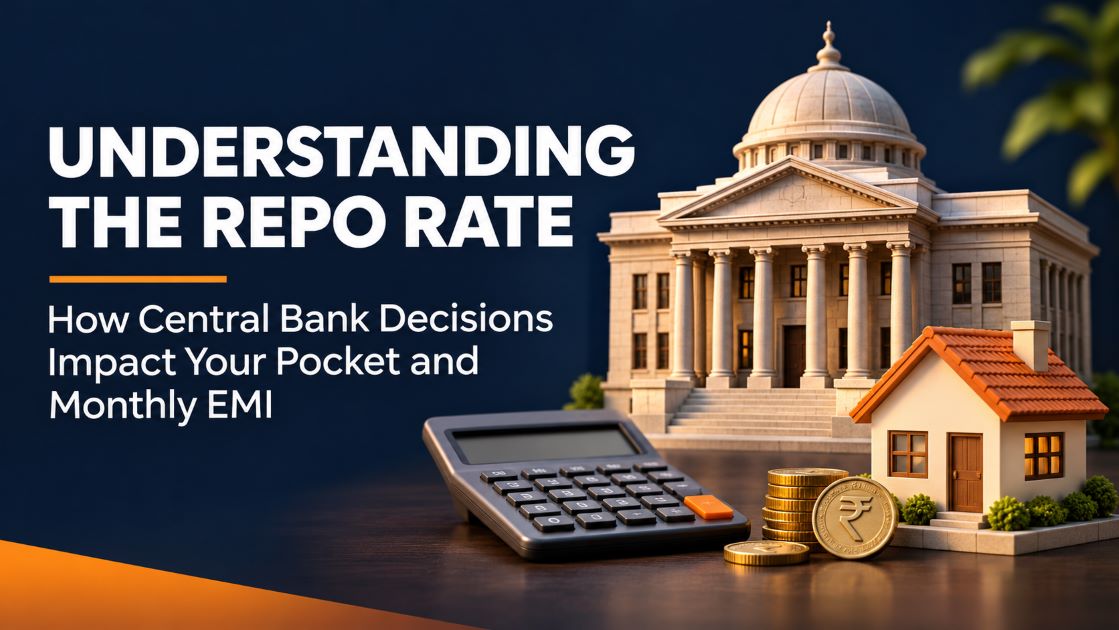
UNDERSTAND IN SIMPLE TERMS: WHAT IS THE REPO RATE -
How Central Bank Decisions Impact Your Pocket and Monthly EMI
Every few months, one phrase dominates financial headlines: the "repo rate." Whether the Reserve Bank of India (RBI) raises it, lowers it, or holds it steady, the announcement triggers a ripple effect—market analysts dissect the news, banks adjust their interest rates, and millions of homeowners brace for changes to their monthly budgets.
Yet for most of us, the repo rate remains wrapped in financial jargon. We know it comes out of high-level central bank meetings, and we know it eventually changes our home or car loan EMIs—but what does it actually mean? Let’s break it down in simple terms.
What Is the Repo Rate? (The Simple Explanation)
At its core, the repo rate is the interest rate at which the central bank (the Reserve Bank of India) lends short-term money to commercial banks (like ICICI Bank, State Bank of India, or Axis Bank) when they experience a temporary shortage of funds.
The concept of a "banker's bank" can be easily understood by considering the relationship between you and your local bank:
When you need funds for a major purchase, you approach your bank for a loan, and the bank charges you interest. Similarly, when commercial banks face a shortage of cash—whether to meet their daily reserve requirements or to fulfill the demand for loans—they turn to their central bank (the RBI). The interest that the RBI charges them on such short-term borrowing is known as the "repo rate."
Just as an increase in the cost of borrowing makes taking out a loan more expensive for you, a rise in the repo rate makes borrowing more expensive for commercial banks as well.
What Does "Repo" Stand For?
The word "Repo" is short for "Repurchase Option" or "Repurchase Agreement." This transaction is structured as a short-term buyback agreement:
1. When a commercial bank borrows money from the RBI, it sells government securities (bonds) to the RBI as collateral.
2. The borrowing bank signs an agreement promising to repurchase those securities at a future date (often overnight or short-term) at a slightly higher price.
3. The difference between the original selling price and the repurchase price represents the interest paid — which, annualized, is the repo rate.
How the Repo Rate Mechanism Works: Step-by-Step
To see how money flows through the financial system, consider this step-by-step transaction:
1. Liquidity Need: A commercial bank experiences a temporary shortfall in liquid funds due to high customer withdrawals or heavy lending activity.
2. Collateral Pledge: The bank approaches the RBI and offers government securities from its holdings as safety collateral.
3. Fund Transfer: The RBI reviews the collateral and transfers the requested short-term funds to the bank at the prevailing repo rate.
4. Repurchase & Payback: On the agreed date, the bank buys back its government securities from the RBI, paying back the principal plus interest calculated at the repo rate.
Why Does the Central Bank Change the Repo Rate?
The RBI's six-member Monetary Policy Committee (MPC) meets regularly to decide whether to increase, decrease, or maintain the repo rate. The primary goal of changing this rate is to balance two critical economic forces: controlling inflation and fostering economic growth.
Scenario A: Fighting High Inflation (Raising the Repo Rate) - When prices of goods and services rise too quickly (high inflation), excess money is circulating in the market.
- The RBI's Action: The RBI increases the repo rate.
- The Ripple Effect: Borrowing becomes costlier for commercial banks. To preserve their profit margins, banks pass this cost on to consumers by raising interest rates on home loans, personal loans, and car loans.
- The Economic Result: Costlier loans discourage individuals and businesses from borrowing and spending. Demand cools down, which helps bring inflation back within healthy targets.
Scenario B: Stimulating Economic Growth (Lowering the Repo Rate) - When economic growth slows down and businesses need encouragement to expand, the central bank steps in to make credit cheaper.
- The RBI's Action: The RBI lowers the repo rate.
- The Ripple Effect: Commercial banks can borrow funds from the RBI at a lower cost. They pass these savings to consumers by cutting loan interest rates.·
- The Economic Result: Cheaper loans encourage families to buy homes and cars, and businesses to invest in new projects. Increased spending stimulates overall economic activity.
Real-World Impact: How Repo Rate Changes Affect Your Wallet
Changes in the repo rate do not stay inside central bank vaults; they ripple across every corner of personal finance.
Impact 1: Home Loans and Monthly EMIs - Most modern home loans in India are floating-rate loans linked directly to the central bank's repo rate through the Repo Rate Linked Lending Rate (RLLR) framework. When the RBI adjusts the repo rate, lenders update their benchmark rates accordingly.
Concrete Example: A ---- ₹50 Lakh Home Loan Imagine you have a ₹50 Lakh home loan with a tenure of 20 years:
|
Scenario |
Repo Rate Adjustment |
Home Loan Interest Rate |
Estimated Monthly EMI |
Monthly Impact |
|
Baseline |
Standard Rate |
8.00% per annum |
₹41,822 |
— |
|
Rate Hike |
RBI raises repo rate by +1.00% |
9.00% per annum |
₹44,986 |
+₹3,164 / month (Higher EMI) |
|
Rate Cut |
RBI cuts repo rate by -0.50% |
7.50% per annum |
₹40,280 |
-₹1,542 / month (Lower EMI) |
Note for Borrowers: When interest rates rise, banks sometimes offer borrowers the choice to keep their monthly EMI unchanged while extending the loan tenure (the umber of years left to pay off the loan). Over long tenures, an extension can add lakhs of rupees to your total interest cost.
Impact 2: Fixed Deposits (FDs) and Savings Accounts -- While a repo rate hike is tough on loan borrowers, it is good news for conservative savers:
- During Rate Hikes: To attract more deposits from the public (reducing their dependence on central bank loans), commercial banks raise the interest rates offered on Fixed Deposits (FDs) and recurring deposits.
- During Rate Cuts: As loan interest rates fall, bank FD interest rates typically decrease as well.
Summary
The repo rate is far more than a technical banking term — it is the master switch of the financial system. By adjusting the cost of borrowing for commercial banks, central banks manage national inflation and economic growth, directly shaping what you pay for your mortgage and what you earn on your savings.
- RBI का कदम: RBI रेपो रेट बढ़ा देता है।
- इसका असर: कमर्शियल बैंकों के लिए कर्ज लेना महंगा हो जाता है। अपना मुनाफा बनाए रखने के लिए, बैंक इस लागत का बोझ ग्राहकों पर डाल देते हैं—वे होम लोन, पर्सनल लोन और कार लोन पर ब्याज दरें बढ़ा देते हैं।
- आर्थिक परिणाम: लोन महंगे होने से लोग और बिजनेस कर्ज लेने और खर्च करने से बचते हैं। इससे मांग कम हो जाती है, जिससे महंगाई को वापस एक उचित स्तर पर लाने में मदद मिलती है।
- RBI का कदम: RBI रेपो रेट घटा देता है।
- इसका असर: कमर्शियल बैंक RBI से कम लागत पर फंड ले सकते हैं। वे लोन पर ब्याज दरें घटाकर इस बचत का फायदा ग्राहकों तक पहुंचाते हैं।
- आर्थिक परिणाम: सस्ते लोन परिवारों को घर और कार खरीदने के लिए, और बिजनेस को नई परियोजनाओं में निवेश करने के लिए प्रोत्साहित करते हैं। खर्च बढ़ने से कुल आर्थिक गतिविधियों को बढ़ावा मिलता है।
Scenario | Repo Rate Adjustment | Home Loan Interest Rate | Estimated Monthly EMI | Monthly Impact |
Baseline | Standard Rate | 8.00% per annum | ₹41,822 | — |
Rate Hike | RBI raises repo rate by +1.00% | 9.00% per annum | ₹44,986 | +₹3,164 / month (Higher EMI) |
Rate Cut | RBI cuts repo rate by -0.50% | 7.50% per annum | ₹40,280 | -₹1,542 / month (Lower EMI) |
उधार लेने वालों के लिए ध्यान दें: जब ब्याज दरें बढ़ती हैं, तो बैंक कभी-कभी उधार लेने वालों को यह विकल्प देते हैं कि वे अपनी मासिक EMI को उतना ही रहने दें, लेकिन लोन की अवधि (लोन चुकाने के लिए बचे हुए साल) को बढ़ा लें। लंबी अवधि तक लोन खींचने से आपके कुल ब्याज खर्च में लाखों रुपये का इजाफा हो सकता है।
- ब्याज दरें बढ़ने पर: जनता से ज्यादा डिपॉजिट जुटाने के लिए (ताकि उन्हें सेंट्रल बैंक से लोन लेने पर कम निर्भर रहना पड़े), कमर्शियल बैंक फिक्स्ड डिपॉजिट (FD) और रिकरिंग डिपॉजिट पर मिलने वाली ब्याज दरों को बढ़ा देते हैं।
- ब्याज दरें घटने पर: जैसे-जैसे लोन पर ब्याज दरें कम होती हैं, बैंकों में FD पर मिलने वाली ब्याज दरें भी आमतौर पर कम हो जाती हैं।